Field ecohydrology is advertised as sunrises over the Pacific and elegant time series. It is also lizards in your sensor housing, and a four-hour hike in because the road became a creek. Both are true. Here is the half that does not make it into the dissertation.
Wildlife has opinions about my equipment
A running theme of my fieldwork is that the Dangermond Preserve was there first, and the local residents treat several thousand dollars of instrumentation as either a chew toy or a sun-warmed apartment. I have made peace with it. Mostly.
-
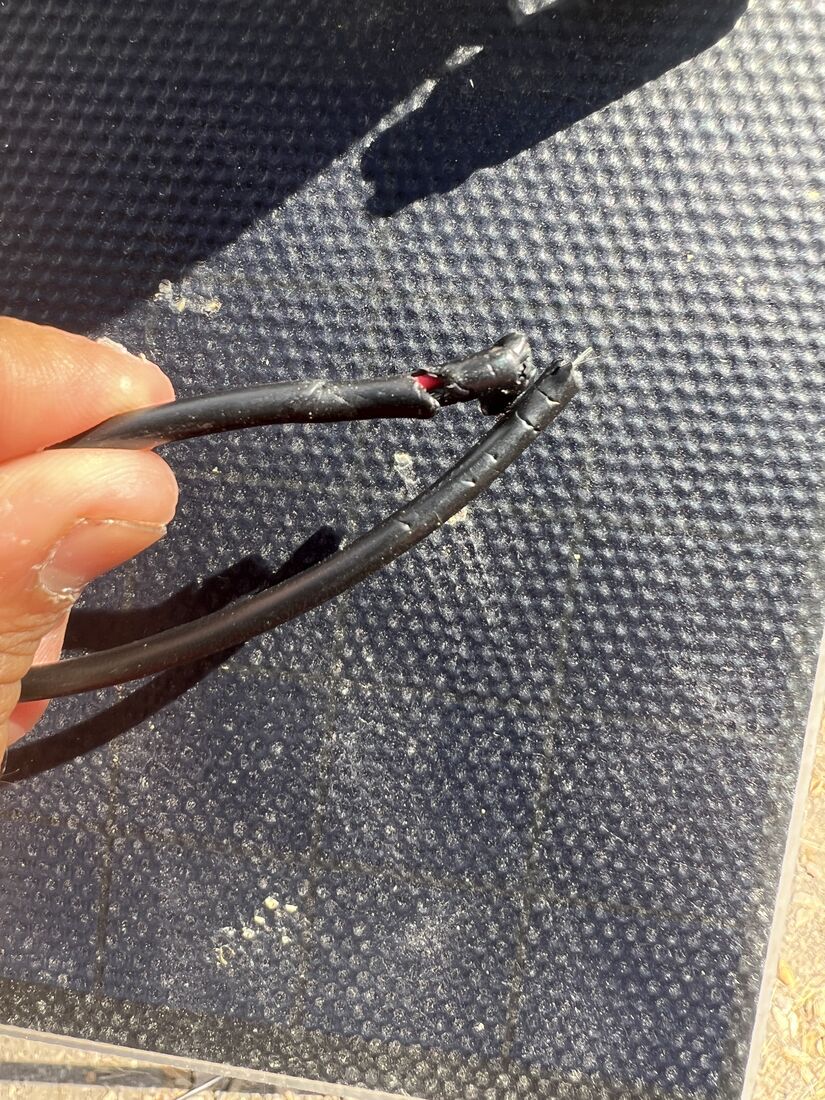
Somebody found the cabling delicious. This is why we re-outfit the site every few months. -
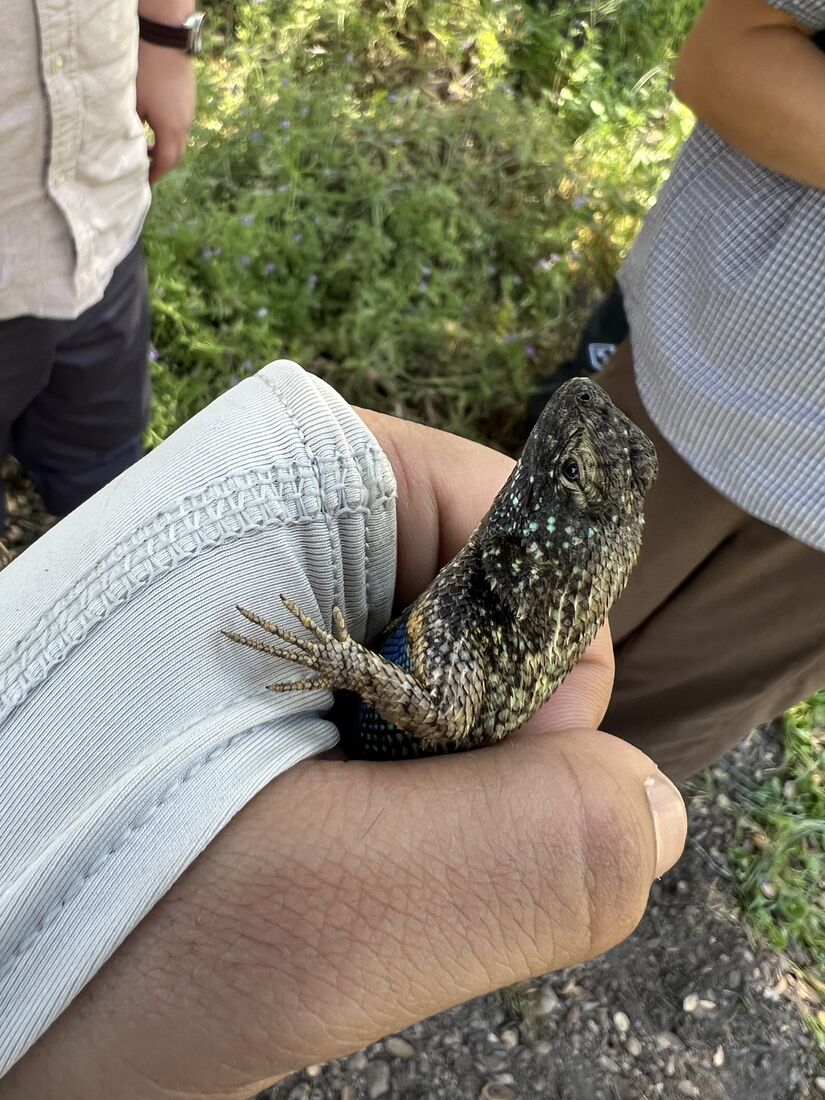
Western fence lizard, briefly detained for a portrait, released without charge. -
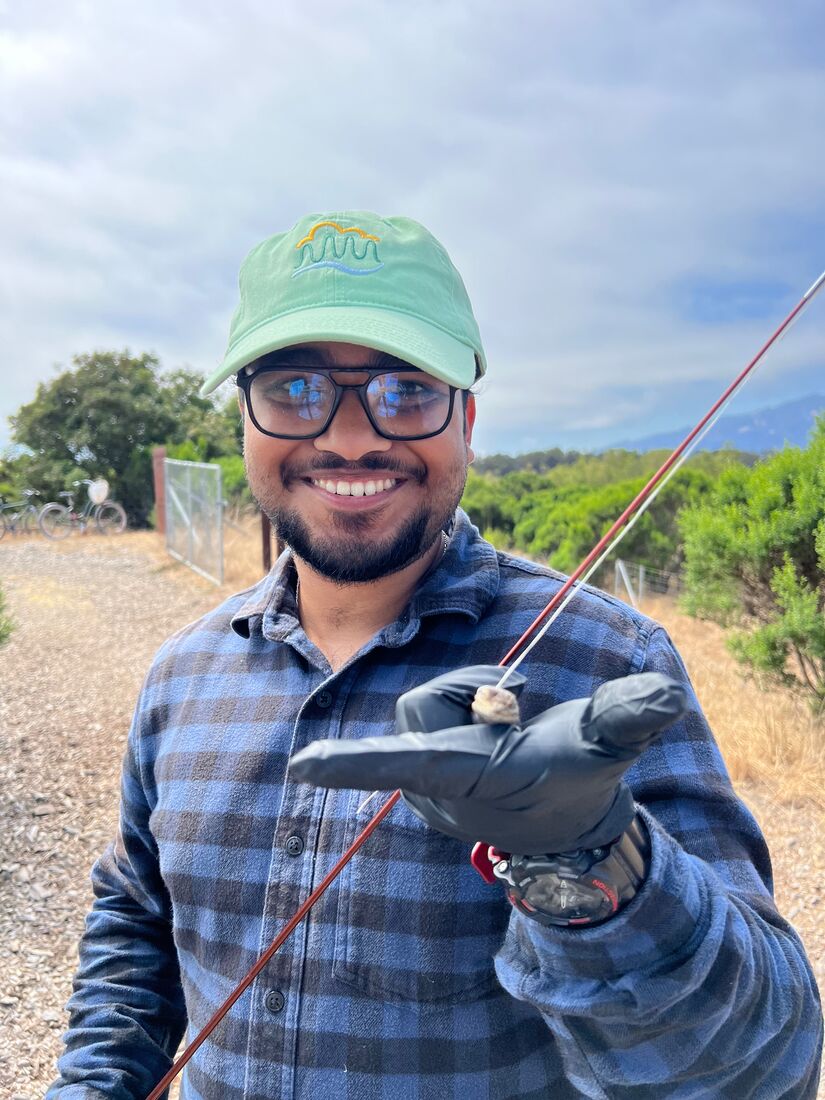
A repeat offender. Or possibly a different lizard. I am not a herpetologist. -
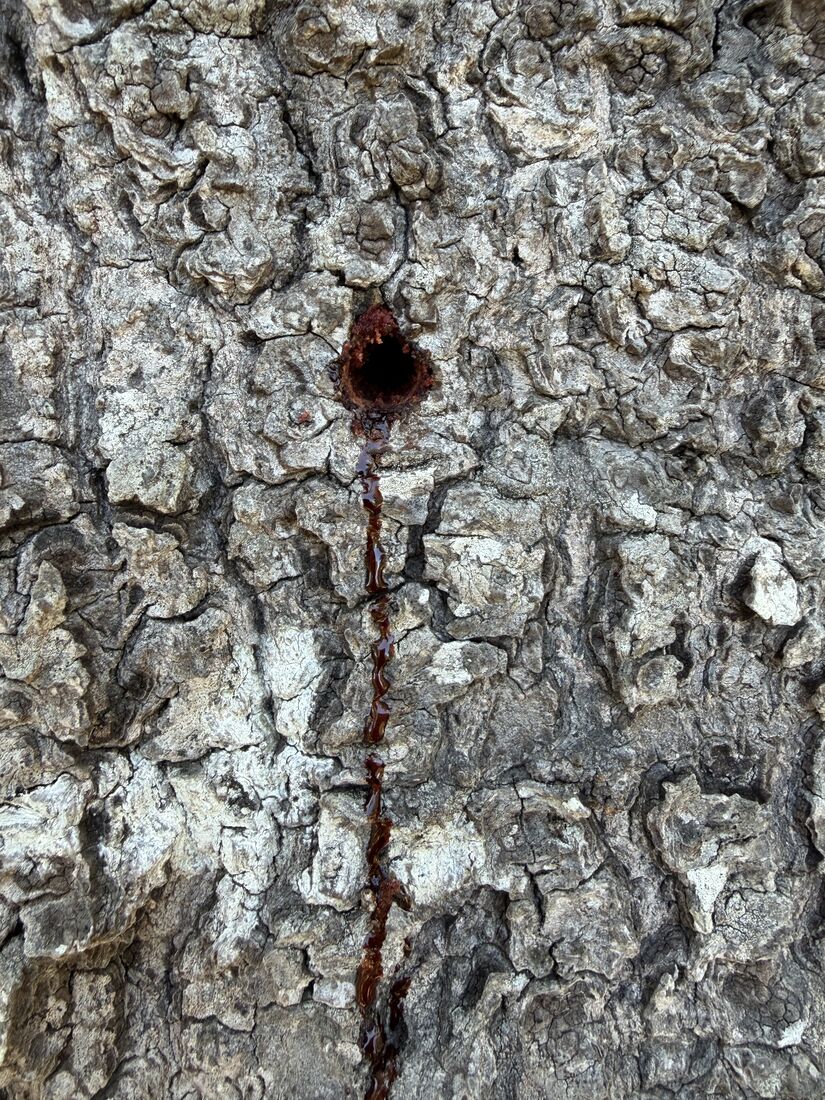
A “bleeding” oak. Alarming to look at, genuinely useful to study. -
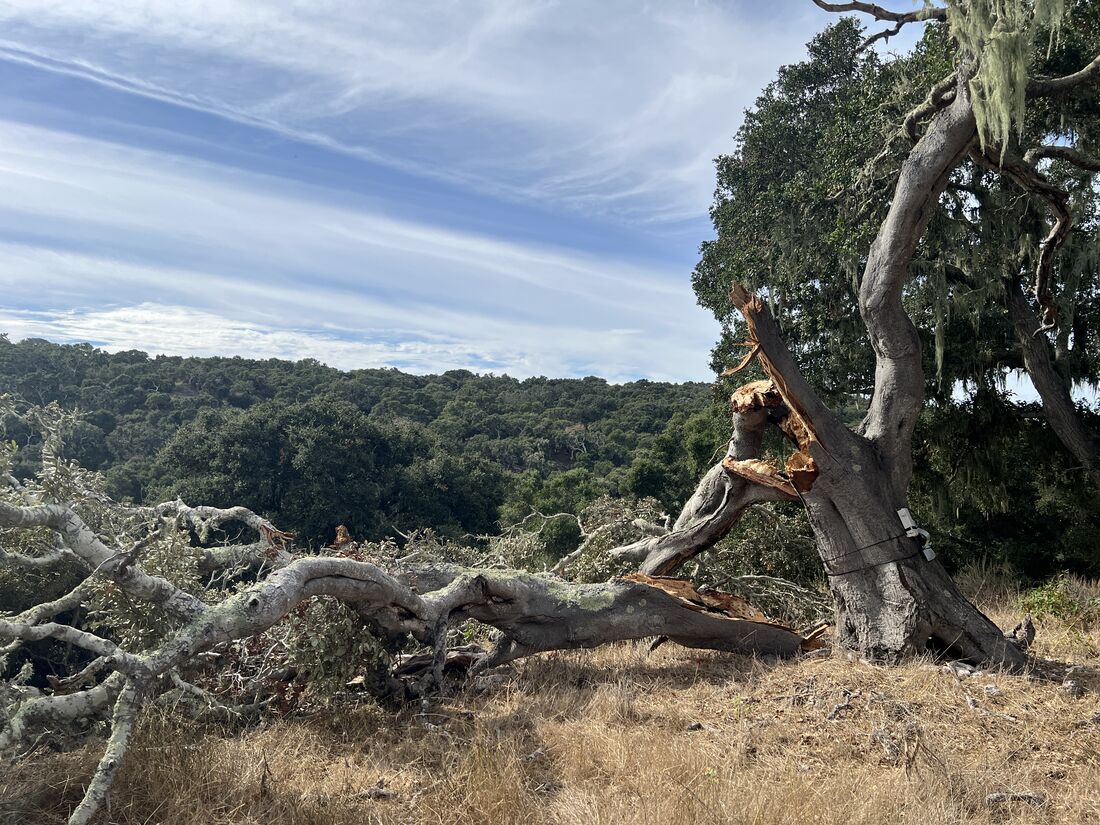
One of my instrumented trees deciding, mid-season, to become two trees. -
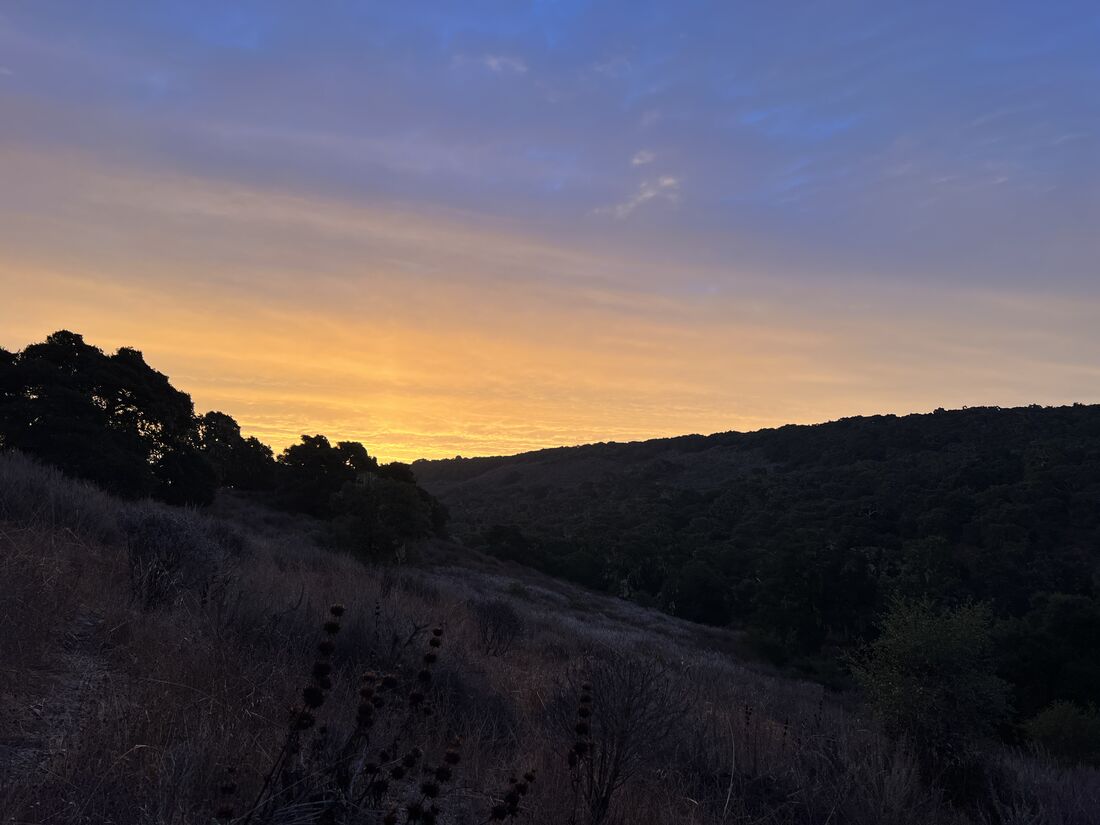
The compensation package. Point Conception at sunrise, before the day goes wrong.
Flying things
I am an FAA Part 107 certified drone pilot, which is a formal way of saying I get paid to fly a very expensive camera over oak trees once a month. The multispectral and thermal imagery drives most of my canopy-scale analysis. It is also where I am at my most confident state - with a controller in hand.
The same imagery, run through structure-from-motion, turns a stack of overlapping photographs into a three-dimensional canopy you can rotate and measure. I still find this slightly magical, and I have watched it happen several hundred times.
Off the clock
I play bass and guitar, and I produce and engineer music — a habit from years of freelance audio and video work that I have never quite managed to give up. When I am not doing that, I am usually cooking, losing at squash, losing slightly less at table tennis, or in the garage with a soldering iron and a project that absolutely nobody asked for.
Check out my channel! I do everything myself, from recording to mixing to mastering, and I have a lot of fun doing it.
There is also a home lab, which began as “a small media server” and has since acquired opinions, uptime requirements, and a UPS. I maintain that this is normal and a pretty relaxing hobby.
On the reading side: thermodynamics, statistical mechanics, information theory and computer vision, pursued with roughly the same intensity as the actual research and considerably less institutional oversight.
Elsewhere on the map
I was born in Rajshahi and raised in Dhaka, spent grades 11 and 12 at UWC Changshu in China and went on to college as a Davis Scholar, and lived in Copenhagen for a year — long enough to reach intermediate Danish and to develop firm views on rye bread. Twenty-two countries so far. I speak Bangla and English natively, Danish passably, and can read Arabic; Russian and Hindi/Urdu are somewhere in the mix.
Long before any of this, I was a competitive quizzer and a WSDC-format debater. It turns out that being able to argue a position under time pressure is excellent preparation for a dissertation committee.