A LoRa/Starlink Field Observatory
An autonomous telemetry network streaming met, soil moisture and sapflow data off a remote coastal preserve in near real time.
Role
Design, deployment and maintenance
Tools
LoRa Starlink MicroPython ZephyrRTOS Solar
The Dangermond Preserve has no mains power and no cellular coverage worth the name. Getting continuous data off a transect there means building the infrastructure yourself.
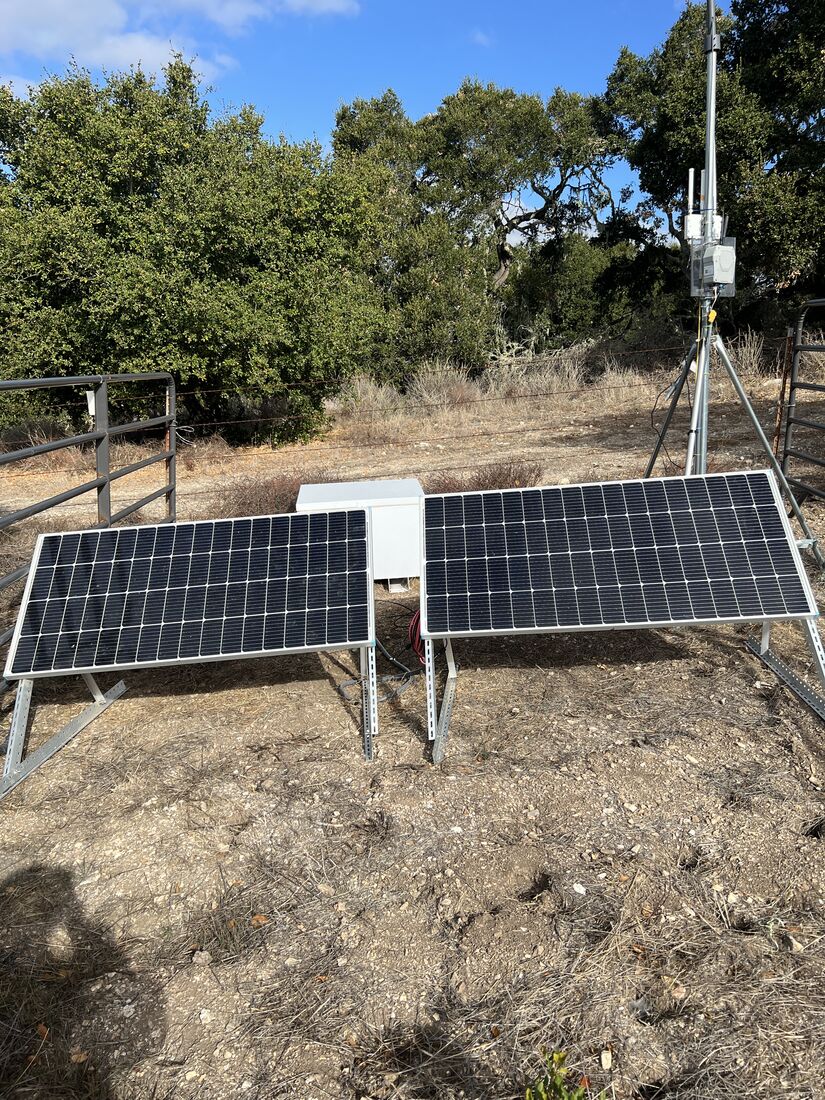
This is that infrastructure: a network of meteorological stations, soil moisture sensors and sapflow loggers distributed across the slope transect, each reporting over LoRa to a gateway, which forwards to lab servers over Starlink. Everything runs on solar.
Design constraints
LoRa was the obvious choice for the sensor tier — long range, very low power, and tolerant of the terrain between nodes. The trade is bandwidth, which means every node has to be thoughtful about what it actually needs to transmit rather than dumping raw samples upstream.
The harder constraints were environmental. Enclosures need to survive coastal salt, summer heat and animals that regard a warm, dry box as an amenity. Power budgets have to hold through a run of foggy days. And the whole system has to degrade gracefully: a node that loses its uplink should keep logging locally rather than losing the interval entirely.
Maintenance is the project
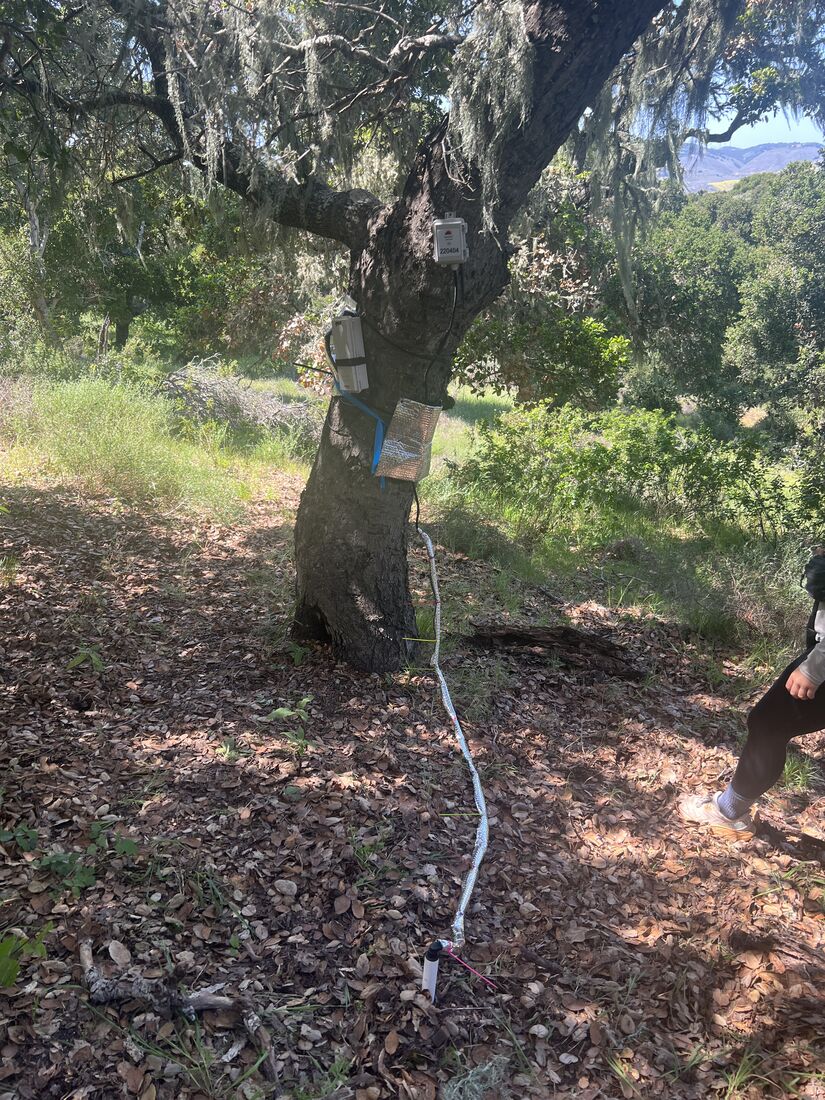
Keeping the network running is miles harder than deploying. In practice that has meant re-outfitting the site every few months against wildlife damage to protective caging, replacing chewed cable runs, and occasionally carrying substantial equipment in on foot when storm damage closes the access roads.
The network now underpins both my dissertation measurements and the live digital twin of the transect.